
Every year, there are votes and polls about which town or city in City in northern Ontario is the fishing capitol. While there are many communities that feature great angling, I can’t think of one other place that has such a diverse fishery as Nipigon, Ontario. Not only is there a multitude of species and opportunities here, but there’s also a real chance at the fish of a lifetime. Mix in the considerable number of places to stay, camp, gas up and eat that Nipigon provides and you have an angling destination without equal. Here are just a few of the opportunities and species available to anglers in and around Nipigon.

Brook Trout
Nipigon and brook trout fishing are synonymous. The 14 and a half pound world record brook trout was caught in the Nipigon River on July 21, 1915 by Dr. J.W. Cook. Even back then, this brook trout was so unusually large it was sent away to be verified by an expert. A replica of the great fish – and the fly rod it was caught on – are on display in the Nipigon Museum. Although Dr. Cooks brook trout is one of the longest standing records in freshwater fishing, anglers flock to the area each year to try and top it. Thankfully, strict regulation and a catch and release ethic have helped Nipigon brook trout thrive and it remains a viable fishery. Boat anglers can ply the waters of the lower Nipigon River, which can be accessed from a boat launch in the town of Nipigon or at a public launch below Alexander Dam, located 16 km. north of Nipigon off highway 585. Shore anglers have great access to the river at the Alexander Dam and on the west side of the Nipigon River Bridge, above and below Hwy 11/17. Brook trout are caught with a wide variety of techniques including casting Nipigon spoons, bucktail jig-flies and Rapala Countdowns. Fly fishing is the classic way to pursue Nipigon brookies, and flies like the Muddler Minnow, Sex Dungeon and Stimulator are popular choices. While both the Nipigon River and Lake Nipigon have brook trout, there are some anglers that prefer to chase “coaster” brook trout on Lake Superior. The coaster name is colloquial and comes from the Lake Superior brook trout’s habit of cruising the shoreline. Coasters can be caught via boat fishing or shore-casting, especially in the spring. Coasters and Nipigon strain brook trout all share the same regulation. That is a one fish brook trout limit, with none allowed under 22-inches. This conservative regulation allows a brook trout to spawn three times before it can be harvested. Thankfully, most anglers release these great and historic fish after they’ve been caught. This allows other anglers to experience the thrill of catching a trophy brook trout. For anglers who want to eat brookies, the Nipigon area has excellent stocked lakes, many of which can be accessed via a hiking trail or bush road. Stocked lakes are put and take fisheries with a five fish limit. and no size restriction. Information on stocked lakes, stocking numbers and GPS co-ordinates are available via Ontario’s Fish-Online website.

Salmon
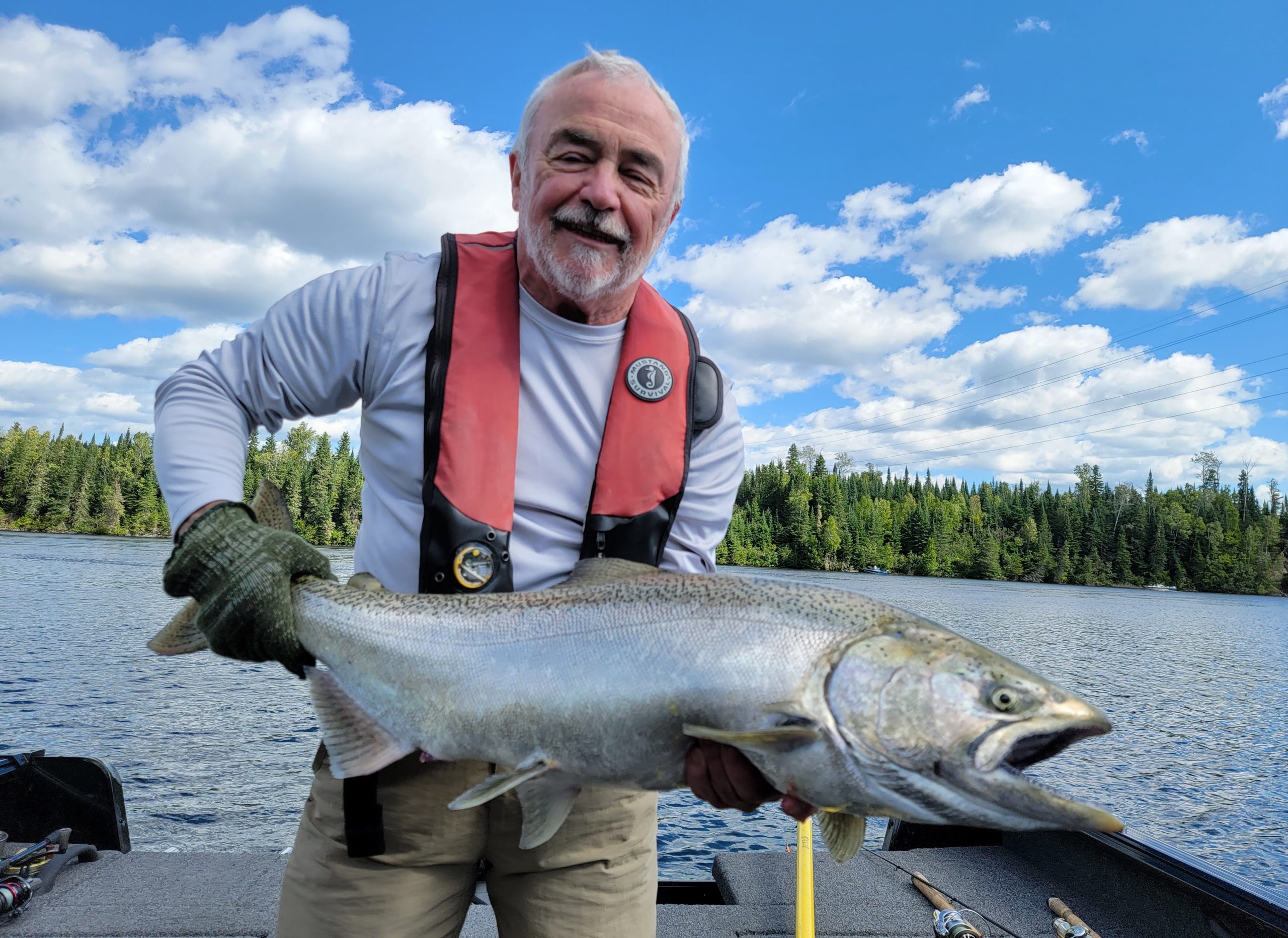
The fall run of Lake Superior chinook salmon into the lower river draws many anglers to Nipigon in August, September and early October. The annual Nipigon Fall Fishing Festival, which takes place on the labour day weekend in September, is primarily focused on the salmon fishery. Lake Superior salmon can grow large, topping 20 pounds, although an average fish is 8 to 12 pounds. When salmon are hooked in the swift current of the Nipigon River, terminal tackle and netting skills are challenged. It’s not unusual for large salmon to break line, or even rods. Most anglers troll for salmon with a jointed Rapala J-13 or similar lure and the terminal tackle needs to be on the heavier side. Strikes from salmon are savage, and you better be holding tight to the rod when it happens. Shore anglers catch salmon by casting crankbaits, spoons and large spinners or throwing a 4-inch rubber swim jigs that look like smelt. Boat anglers often troll Nipigon Bay near the mouth of the Nipigon River with spoons and downriggers to target salmon moving into the river.
Steelhead/Rainbow Trout
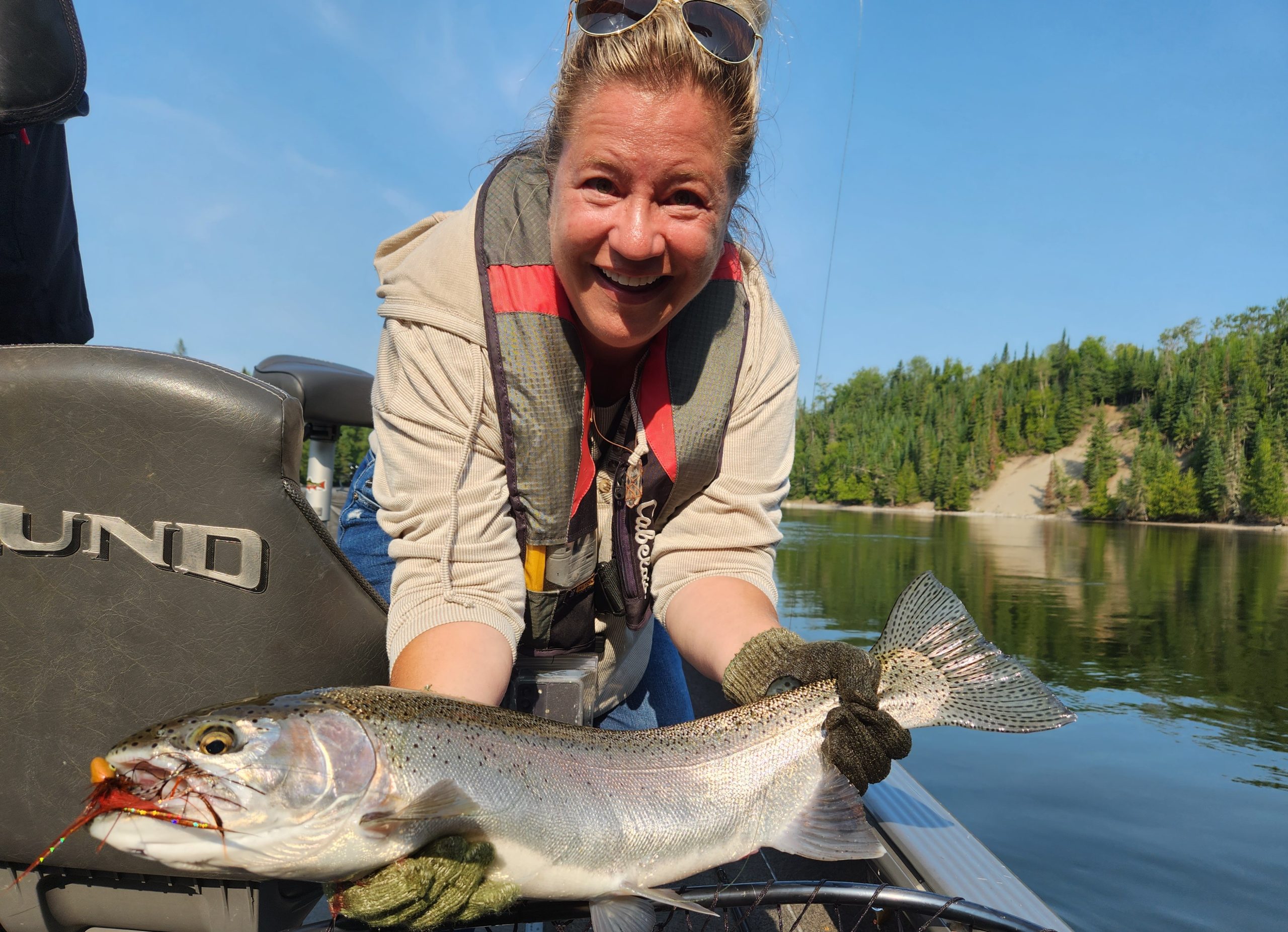
Steelhead are the name given to rainbow trout that live in Lake Superior and have naturalized in the big lake. Every spring these fish run up the Nipigon River, as well as the many tributaries that enter Lake Superior east and west of Nipigon, to spawn. The spring steelhead run is a time when anglers target these great fish. Steelhead are powerful fighters and can grow to weights approaching ten pounds. The peak of the spring run is late April to mid-May, but on the Nipigon River, it’s not uncommon to still be catching steelhead in June. Because the Nipigon River is so large and cold, I’ve caught steelhead in the river in mid-summer. There are also resident rainbow trout that never leave the Nipigon River. These fish are fatter than a typical steelhead and have a bright pink slash down the side and prominent pink on the fins. Spring steelhead anglers catch fish on brightly coloured yarn flies or roe bags bounced along the bottom or under floats. Lure fisherman can catch steelhead by casting Little Cleo spoons, Mighty Mitch and Jungle Joe Jig Flies or Mepps Aglia Spinners. Steelhead that drop back into Lake Superior will be quite aggressive near river mouths and along shoreline points well into June. This provides a wonderful opportunity for small boat/canoe and shore anglers alike. The steelhead population is also fragile, hence a conservative one fish limit. Most steelhead/rainbow anglers will release these fish as they can spawn many years in a row.
Lake Trout
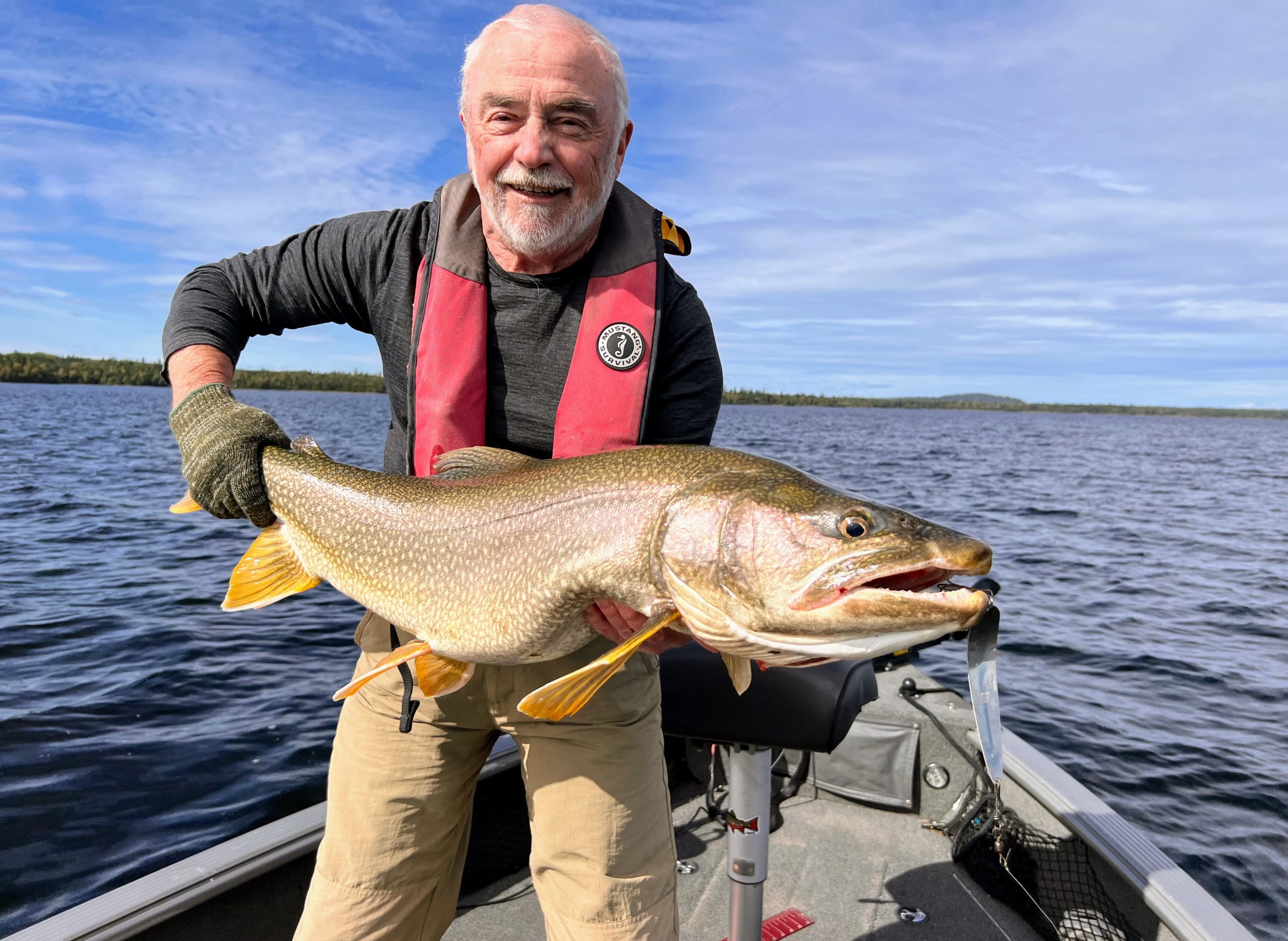
Lake Nipigon is arguably the greatest drive to lake trout fishery in North America. This huge lake is cold, deep and has not been invaded by parasitic sea lamprey. This combination allows lake trout to grow old and to a generous size. While Lake Superior (including Nipigon Bay) is home to bountiful lake trout, the average size of the fish caught is smaller than Lake Nipigon fish. Which is not to say there are not big lakers in Superior because there are. But Lake Nipigon is a place where a 20-pound lake trout is a real possibility, and catching a 30 pounder is more than just a pipe dream. Access to the south end of Lake Nipigon can be made up Hwy 585, and then via a 16 km drive down the South Bay Road. Open water fishing for lakers starts at ice out in late May and runs until the end of September, when the season closes. Anglers catch lake trout by trolling or casting in the early season when the lake trout are shallow. As the surface water warms in the summer, anglers troll with downriggers or lead core line and find the lake trout a little bit deeper. Lake trout are occasionally found in the lower Nipigon River, particularly in the spring and fall when they run in from Lake Superior. Lake trout are also landlocked in Jessie Lake, a reservoir on the Nipigon River located between the Cameron Falls and Pine Portage dams.
Pike/Walleye/Bass
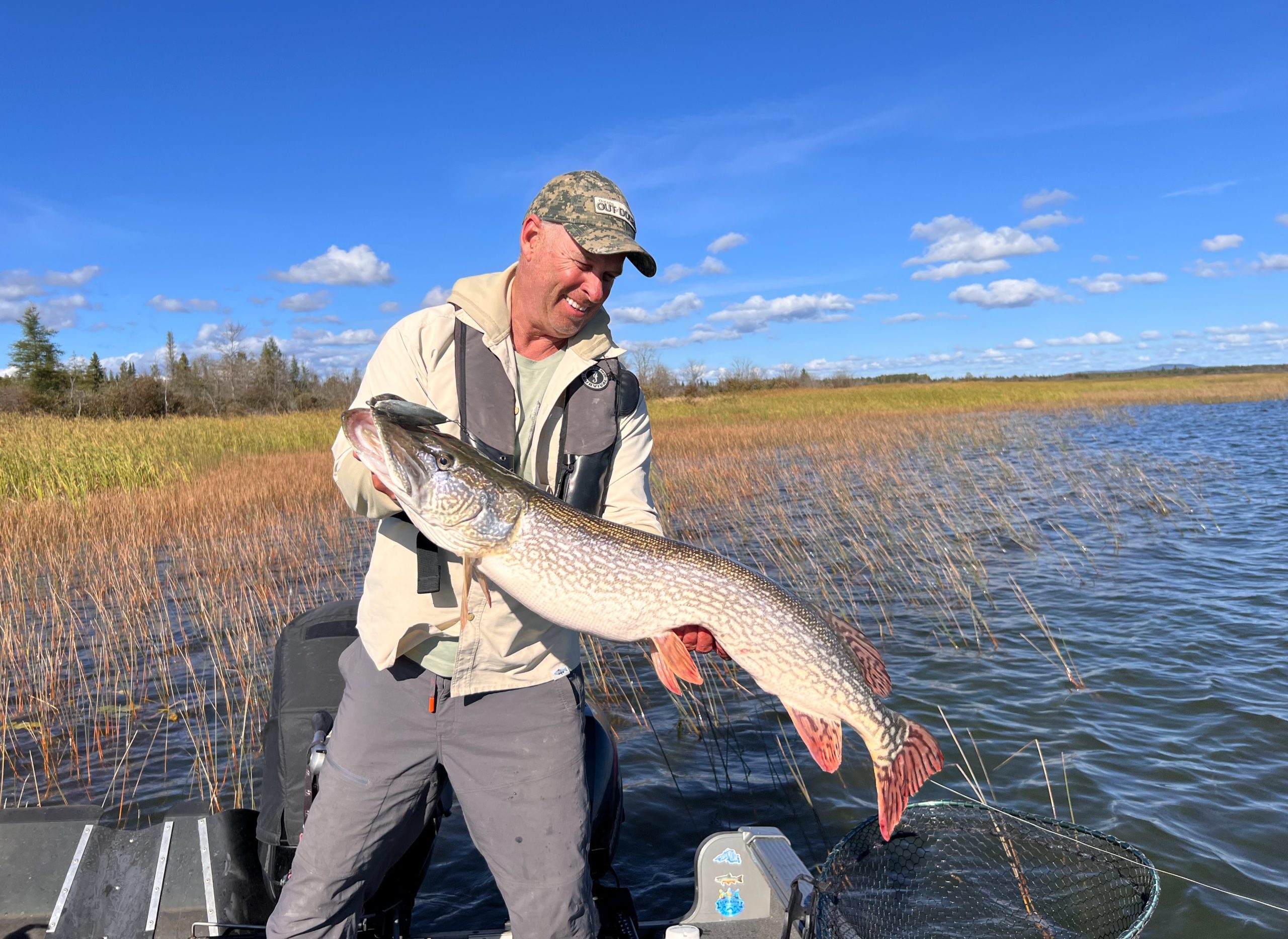
While the Nipigon region is understandably famous for its trout and salmon fishing, that’s not the only game in town. The whole Nipigon system has world class pike fishing, with some truly huge specimens found throughout the watershed. Lake Nipigon is one of the best trophy pike fisheries in North America, with both numbers and large fish. Northern Pike to 50 inches are caught every season on Lake Nipigon. Nipigon Bay, on Lake Superior, is home to giant pike, many of which run up local rivers including the Nipigon. Brook trout anglers in the river occasionally hook up on pike that measure 40 inches or more. Black Bay, located east of Nipigon Bay, also has giant pike opportunities. Walleye are protected in the lower Nipigon River and in Nipigon Bay and fishing for them is not allowed. However, nearby Black Bay, which can be accessed at Hurkett Cove, just 20 minutes west of Nipigon, has a new walleye season as of 2026 that runs from July 1-Dec. 30. An angler can keep two walleyes in Black Bay, but they must be between 40-50 cm. Trophy sized fish are a very possible catch in Black Bay, but large walleye must be released. Black Bay also has an excellent and underused population of smallmouth bass. The average smallmouth is 16-17inches but bass approaching 20-inches are not out of the question. It is very possible to catch a personal best bass, walleye and pike in three casts on this bay.
That’s a taste of what Nipigon can offer the intrepid angler. Whether you are driving through town, or staying for a week, there is an angling adventure waiting. You should come and visit Nipigon, Ontario’s fishing capitol of northern Ontario.

Posted by Gord Ellis
Gord Ellis is a Thunder Bay–based journalist, broadcaster, professional angler and guide, photographer, and senior editor of Ontario Out of Doors. He has published over 1,000 articles, earned more than 25 national awards, and was inducted into the Freshwater Fishing Hall of Fame in 2018.