
Author: danny
Nipigon, Ontario is one of those places people think they know — until they realize they really don’t. It’s driven through, talked about in fishing circles, admired from lookouts, and wildly underestimated. Which is exactly why it deserves a little myth-busting, a few fun facts, and some honest answers to the questions people are usually too polite to ask. Consider this your unofficial guide to Nipigon: equal parts legend, landscape, and “wait… what?” moments.
Is there anything to actually do in Nipigon… or is it just pretty?
Both. And thank you for asking.
Yes, Nipigon is undeniably, unfairly beautiful. The kind of place where you pull over “just to take one photo” and then accidentally spend 20 minutes staring at the horizon and the bald eagles soaring overhead, like you’re in a nature documentary. But it’s also a playground for people who like their fun outdoorsy, slightly muddy, and followed by snacks.
Fishing is kind of a big deal here. The Nipigon River system is famous among anglers — world-class brook trout, salmon, and stories that definitely get bigger with each retelling. Hiking? Plenty. Boating? You’re literally standing at the gateway between Lake Superior and the largest tributary system feeding it. Paddling, swimming, birding, cycling, ice fishing, ice climbing, cross-country skiing — Nipigon does not hibernate, it just changes gear.
And when you’re done outside? There’s great food, friendly locals, and the satisfying feeling that you’ve discovered something not everyone else has yet.
Has Royalty ever visited Nipigon?
Yes. Actual, honest-to-goodness royalty. Rods, reels, and all.
Long before influencer trips and hash tagged adventures, members of the British Royal Family made their way to Nipigon for one very specific reason: the fishing. The Nipigon River’s legendary brook trout didn’t just attract anglers — they attracted royal anglers. At various points in the early 20th century, British royalty, including Edward, Prince of Wales, came to experience what was already internationally recognized as some of the finest freshwater fishing on the planet.
Think about that for a moment. Of all the places in the world they could have gone — castles, estates, private waters — they chose Nipigon. No crown required. No fuss. Just a river, a line in the water, and the quiet understanding that this was something special.
What’s even more on-brand? The visit wasn’t turned into a spectacle. No parades. No velvet ropes. Around here, the fish don’t care who you are — and neither do the locals.
So yes, royalty came to Nipigon. They fished the same waters people fish today, admired the same scenery, and likely left with the same thought visitors still have: how is this place not better known?
Does Nipigon hold any world records?
Believe it or not — yes, the Nipigon River does hold a world record. And not just any record, but one that’s stood for over a century without a challenger even close. That’s right: forget “tallest stack of pancakes” or “most moose seen at once” — this one is epic.
On July 21, 1915, an angler named Dr. J.W. Cook – a physician from what is now Thunder Bay – was fishing the mighty Nipigon River when he landed something no one had ever seen before — and no one has seen since. What emerged from Rabbit Rapids (just below Virgin Falls) was a brook trout that weighed a staggering 14 pounds, 8 ounces, measured around 31½ inches long, and had a girth most linebackers would envy. That fish still holds the all-tackle world record for the largest brook trout ever caught.
To put this in perspective: most big fish stories talk about 4- or 5-pounders, maybe 7 or 8 if you’re very, very lucky. But the Nipigon beast? It was in a league of its own, so huge that when Dr. Cook first hauled it in, he thought it was a lake trout. Only after his Indigenous guides pointed out its true identity did the implications sink in.
And yes, if that one wasn’t enough fishing folklore for you, the very next day the same party managed to hook two large brook trout on a single line at the same time, another record-worthy double-header that’s still talked about among die-hard anglers.
Why is everyone so obsessed with “the Bridge”?
Short answer: because it’s iconic. Longer answer: because it’s impossible not to stare at.
The current version of the Nipigon River Bridge took five years to construct. It was started in 2013, and fully opened November 25, 2018. It isn’t just infrastructure — it’s the unofficial mascot, selfie backdrop, and most photographed resident of the community. Spanning the river at its narrowest point, the bridge and Nipigon, are at the crossroads of Canada. If one is traveling across the country, you MUST go through Nipigon and you MUST cross that bridge. It’s no wonder a plan was uncovered during World War I to blow up the original bridge – and halt Canada’s economy.
It’s also the first cable-stayed bridge in Ontario. Locals are proud of it. Visitors are intrigued by it. And everyone, without fail, slows down to look at it — whether they meant to or not. It’s especially beautiful at night when it’s lit up in a pale blue colour that reflects magically in the waters of the river. There’s even a proper pedestrian walkway that you can take from the nearby lookout tower, UNDER the bridge and across. So you can get up close and personal to the structure and feel the rumble of the vehicles passing over. Very cool.
Has Nipigon ever had its 15 minutes of fame?
Short answer: yes.
In January 2016, when half of the Nipigon River Bridge was opened to traffic, it experienced a bearing failure during extreme cold, causing the deck to lift, forcing the bridge to close temporarily. Translation for non-engineers: the bridge didn’t fall down, crack in half, or float away, but it did decide, briefly, that this winter stuff was too much. Traffic across Canada’s only east-west highway was halted, headlines flew, memes went viral (think the Dukes of Hazard’s General Lee flying over the bridge) and suddenly Nipigon was known internationally (yes, jokes were even made on American late night talk shows) as that very important pinch point on the Trans-Canada Highway.
The good news? Engineers fixed it, improvements were made, and the bridge reopened stronger, smarter, and with a much better understanding of what Northern Ontario winters are capable of. Today, it stands proudly doing exactly what it was designed to do, connecting the country, stopping travelers for photos, and reminding everyone that even modern marvels need a little humility when old man winter is involved.
Is Nipigon just for hardcore, outdoorsy people?
Absolutely not, although the hardcore outdoor people are doing just fine here too.
You don’t need a $4,000 fishing rod, a GPS watch, or a dramatic backstory involving conquering personal limits to enjoy Nipigon. You just need curiosity and a willingness to slow down. This is a place where a simple walk along the trails feels like an event, and swimming in picturesque, spring-fed Lofquist Lake, can qualify as a productive afternoon.
Nipigon is approachable wilderness. It’s where beginners feel welcome, families feel comfortable, and seasoned adventurers appreciate the lack of crowds. You can do as much, or as little, as you want. The town isn’t judging. In fact, it’s probably just happy you stopped to visit.
Is Nipigon worth stopping for, or should I just keep driving?
Here’s the honest answer: if you blink, you’ll miss it. And you will be sorry you did.
Nipigon is one of those places that doesn’t scream for attention. It doesn’t need to. It quietly waits for people who appreciate authentic experiences and big landscapes. It’s a place that rewards stopping, even briefly, and often convinces people to stay longer than planned.
Whether you’re road-tripping, chasing fall colours, or following the fish, Nipigon delivers. It’s not flashy. It’s not overproduced. It’s just genuinely good.
And sometimes, that’s the best kind of destination.
Another week, another adventure! This week’s journey took us on the Nipigon River Recreation Trail, which is actually part of the Trans Canada Trail. I’ve done this hike a few years back and could remember it being a challenge, but well worth it! The second time around proved to be the same situation.
This hike is a well maintained, 10 km trail that can take 2.5 to 3.5 hours to complete. Signage is excellent, and there are two trail heads, one at the Nipigon Marina, and one in Red Rock, just before you hit the railway tracks.
I brought my dad with me since he enjoys hiking, and knows the trail extremely well. We started in Red Rock, but you can start at either end depending on your desired end destination. Just remember, this is not a loop trail so you will need a ride back to your vehicle.
The first part of the hike is a slight incline up for about 1 km, bringing you to Lloyd’s Lookout. It has such an amazing view!
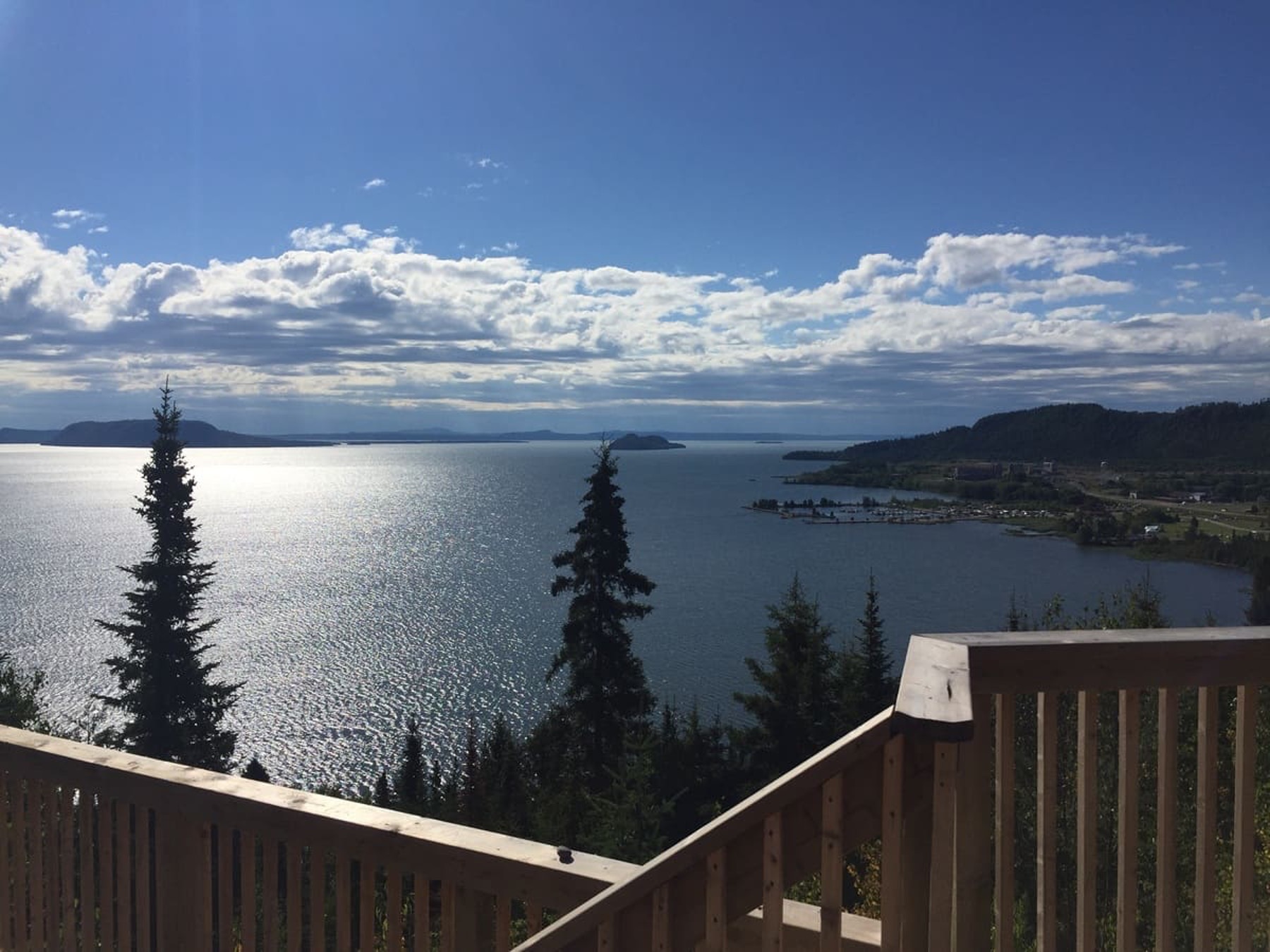
I personally think this is the best view along the hike. You get a beautiful scene of Lake Superior, Red Rock, and Nipigon Bay. There is also a multi-level viewing platform that was recently installed which makes it easier to linger a bit and drink in that view. A few minutes later you can find the Parks Canada big red chairs, so of course I had to stop and get a picture in them.
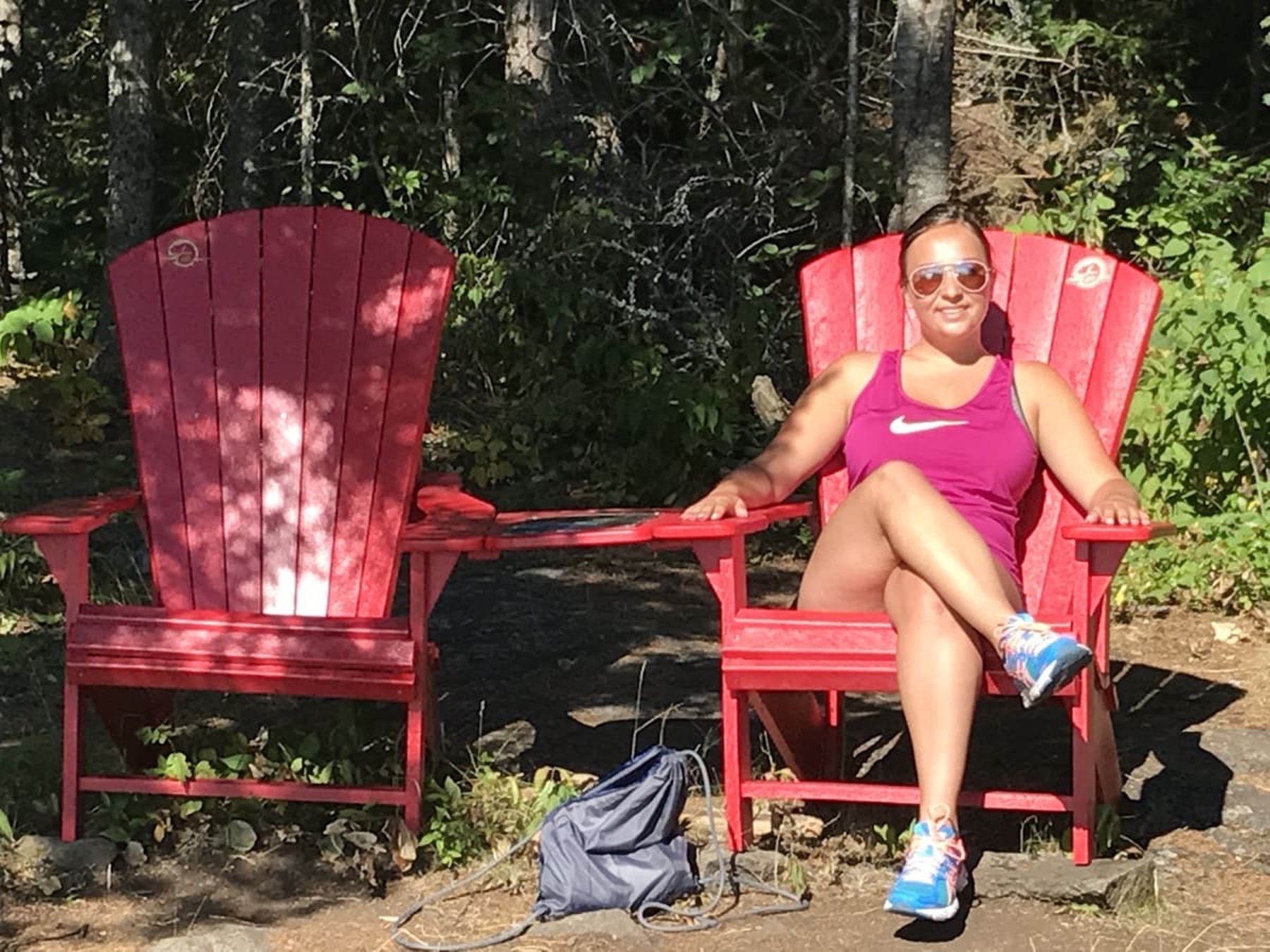
The next part of the hike was super fun. I didn’t know this, but there are actually two trails, a flatter one, and a trail where you are required to climb some rocks. We of course took the more difficult one, why not right? Eventually the two trails meet up again, and continue to Eagle’s Ridge. Another breathtaking vista! Next was the stairs. There are three sets of stairs along this hike. Luckily because we started in Red Rock, we only had to climb one set, and down two sets.
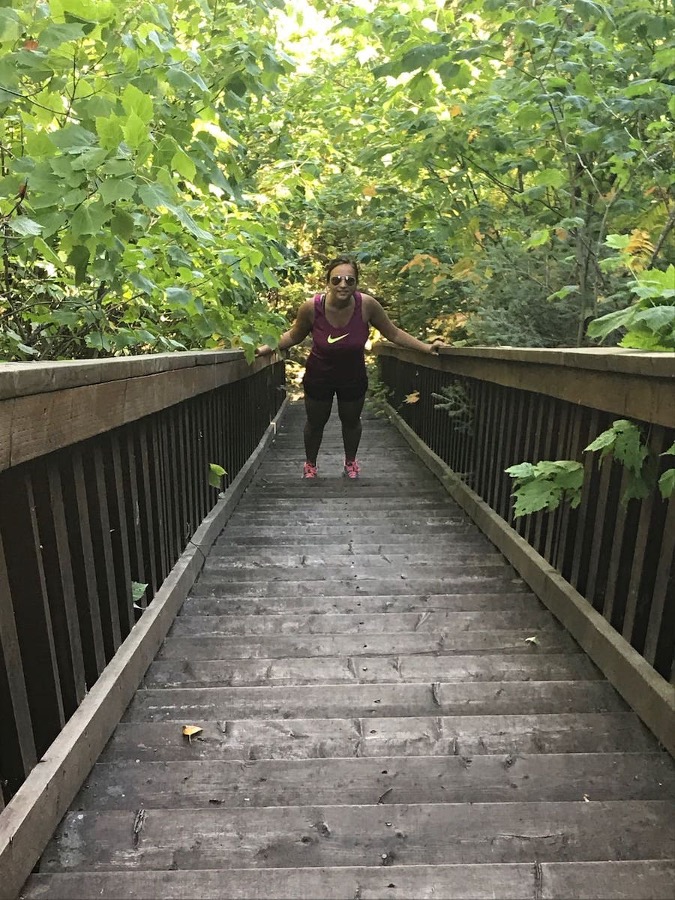
According to my guide (Dad), before the stairs were installed, there used to be ropes to help people climb up and down. I can’t imagine… the stairs are MUCH easier. The next part of the trail is where you need to pay attention to footing. There are a lot of bigger rocks to walk over, so be very careful. The last 3 km of the trail is where it got nice and flat. I loved this part of our hike, strictly because I learned so much. Every bridge, sign, and old trail we passed had a story. Plus, there are more opportunities to see wildlife. My dad and I actually saw a deer, which was pretty cool.
A few months ago, when I started my intern position, I learned there is a committee dedicated to the trails in our surrounding area. I also learned that there had been a committee started long before. In the early 1990’s the group had been incorporated and named the “Land of the Nipigon Waterways Development Association” (LNWDA).
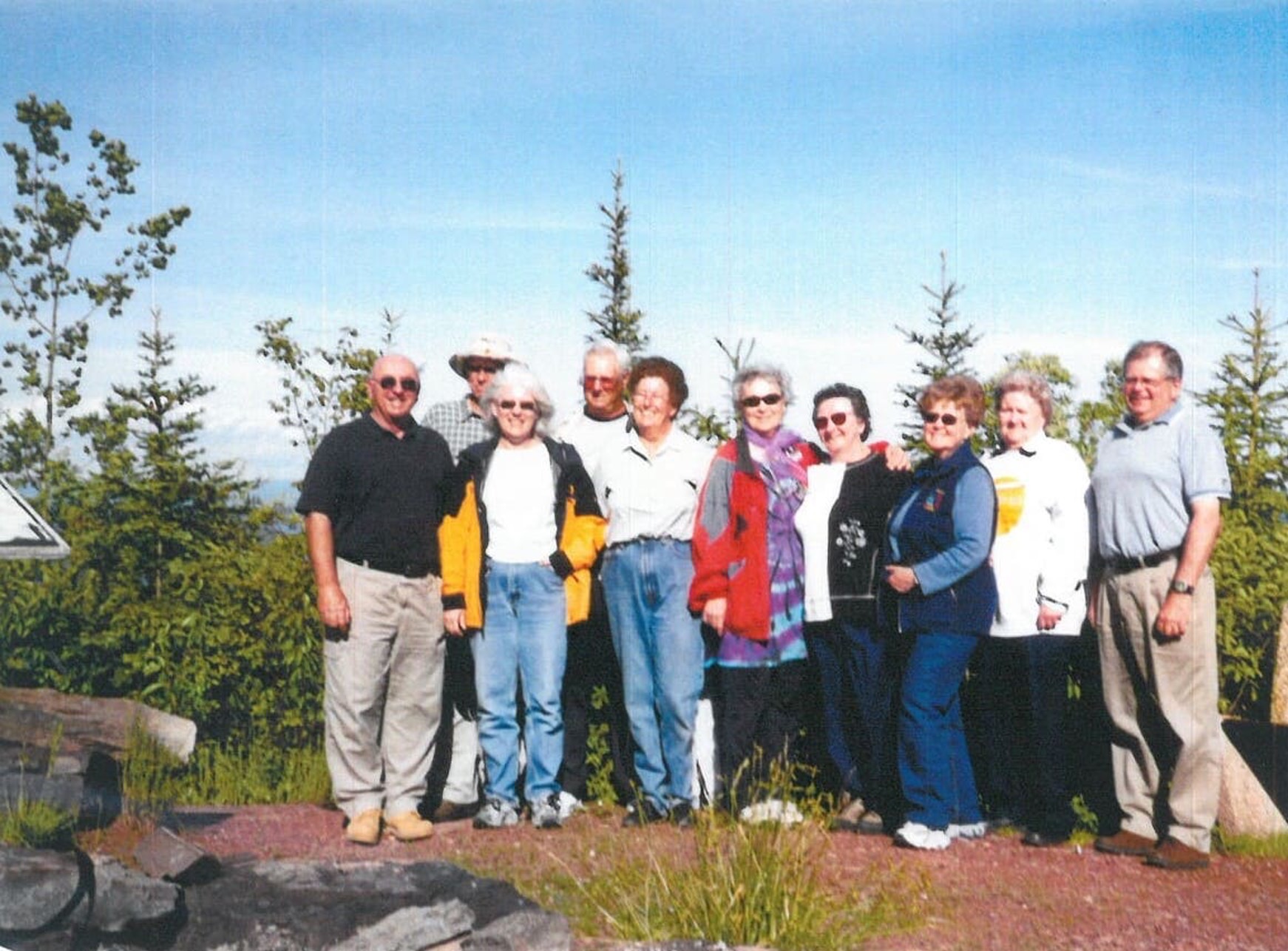
Following a feasibility study, it was determined that Phase One of an overall plan would be to build a trail along the Nipigon River, linking the towns of Nipigon and Red Rock. With the help of grants from all levels of government, and donations from businesses and organizations, construction of the trail commenced in 1992. From then on, many volunteers worked hard to ensure this hike was the best it could be. According to data compiled by Parks Canada, the Nipigon River Recreation Trail continues to be, by far, the most popular hiking trail in the area.
The Trans Canada Trail, or “The Great Trail” as it has been re-branded, is the longest recreation trail in the world. It spans 13 provinces and territories, and offers a wide range of activities through a variety of landscapes. On August 26th, 2017, the TCT, with support from Canadian Heritage, has a goal to connect The Great Trail and the country for a grand celebration. Nipigon will be holding their celebration down at the marina starting at 6:00 PM. I invite everyone to come down and join in the festivities! There will be food (pork on a bun, corn, coleslaw and cake) while supplies last, voyageur canoe rides, activities for the kids, and an outdoor movie screening of the documentary “Painted Land”. Plus, yours truly will be there. And the best part is everything is FREE. Yes, even the food.
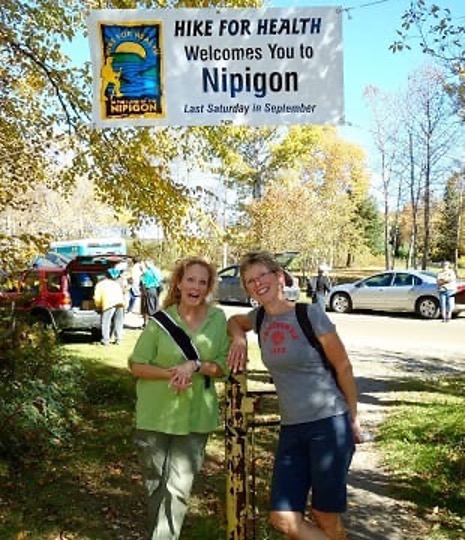
A fantastic event that happens annually on this trail is the Hike For Health. Every September, on the last Saturday of the month, locals and visitors gather in Red Rock to have breakfast, and then set off for the hike to Nipigon. The committee hosts a delicious lunch at the Nipigon Community Centre following the hike. This is a fundraiser that supports local and area health programs, and also supports the maintenance of the trail. So I would encourage everyone to come out for that, too.
This was by far my favorite adventure so far, but I would not recommend it for those with mobility issues, as it is a very challenging hike. If you can’t handle the ruggedness of the interior trail, I would recommend doing the hike up to Lloyd’s Lookout, or walking along the flat area of the Nipigon side.
Until next time, exploring the edge.

Posted by Jonna Z
Fishing time! With it being prime salmon fishing season, I figured it would make perfect sense to add a trip to the Nipigon River to the exploration schedule for the week. I personally am not big on fishing (something to do with patience) but I do enjoy going out a few times during the summer. This adventure started EARLY on the Nipigon River, a short drive up Highway 527 (off 11/17 at the Petro). We launched the boat at Alexander Dam (once again, the boys launched the boat, while I watched) and then it was fishing time. We spent an hour and a half trolling up the river towards the buoys in front of the dam itself, then back to where we started.
A BIG shout out to my cousin Joel and buddy Liam for having to listen to me constantly complain about not catching anything. We moved down the river farther and fished there for a while longer before deciding to troll back towards the boat launch. Just as we were about to reel the rods in and call it a day, Joel got a bite. Perfect timing. He landed a beauty salmon. We didn’t weigh it, but I would guess it to be about 12 lbs. I wanted to get a picture of it coming in the boat, but the boys didn’t want me to publicly reveal the lure they were using!! Well, I was thankful that they took me out, so I obliged.
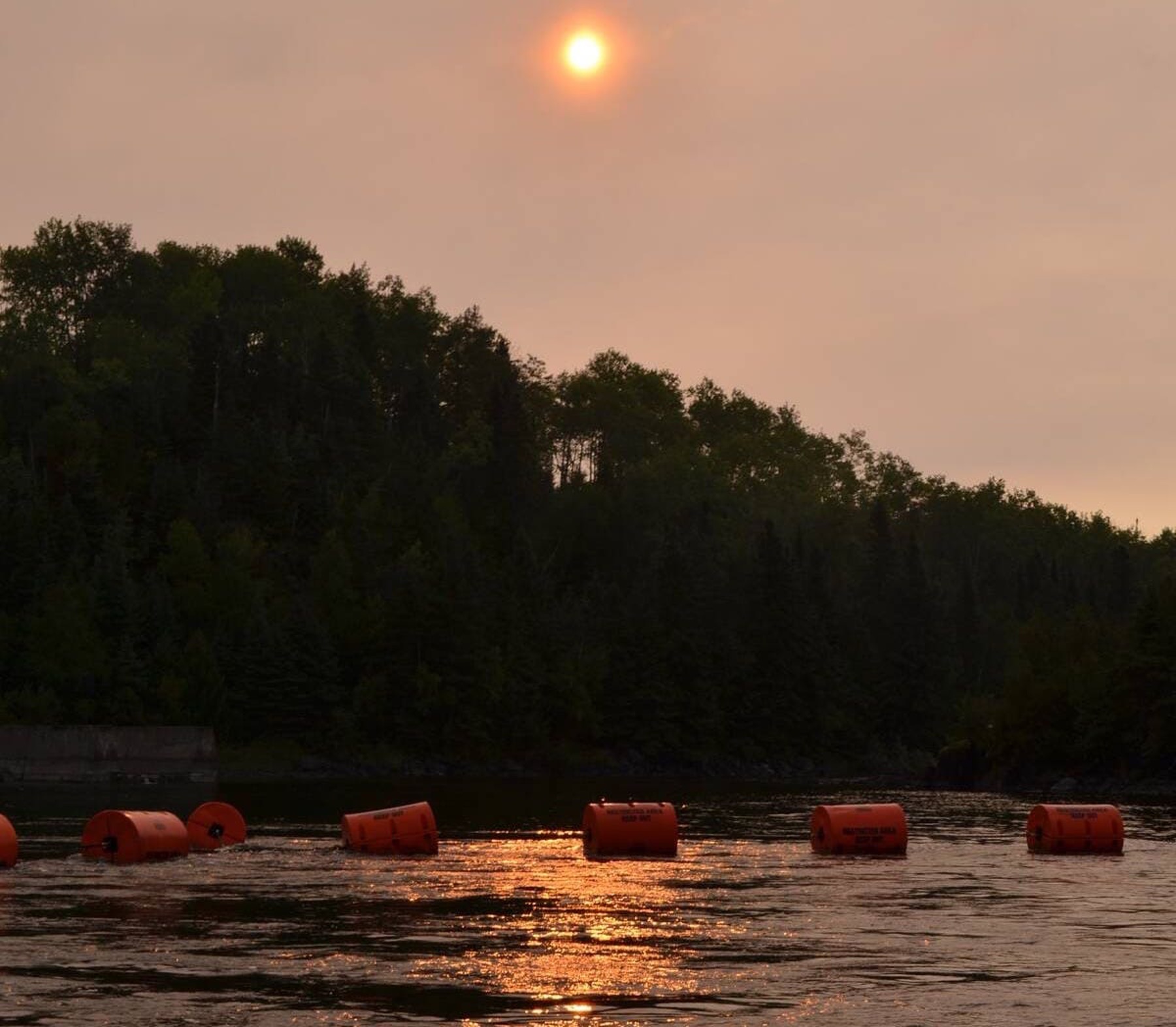
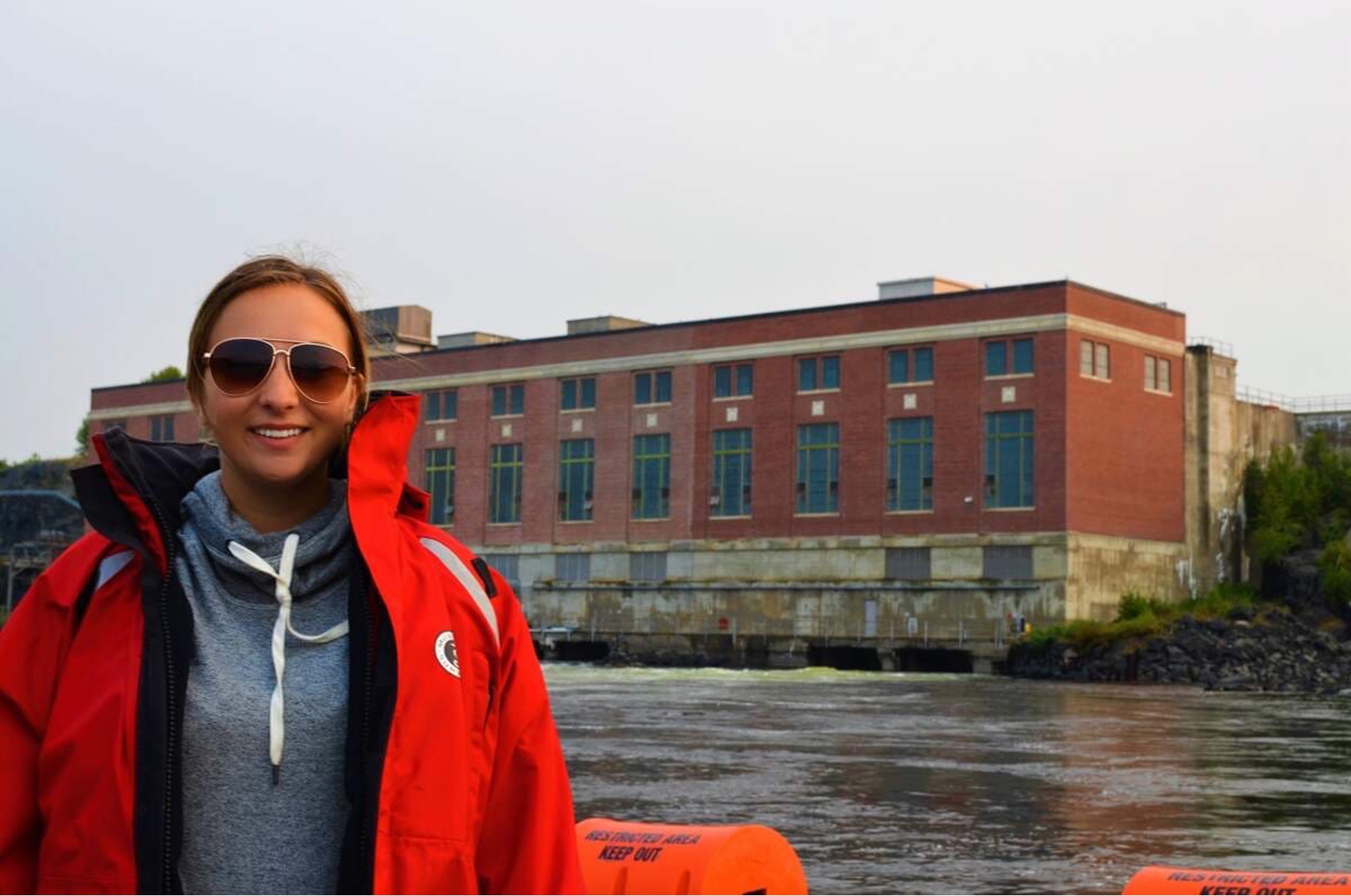
When we first got to the river I was shocked at the amount of boats there were, but according to my fishing partners, it gets busier. The Nipigon River is a very popular fishing spot. It is about 48 km long and flows from Lake Nipigon to Nipigon Bay on Lake Superior. The river is home to all types of fish, and during this time of the year the river is full of salmon. Once spring hits rainbow, lake trout, perch and brook trout are plentiful. Walleye are caught in the summer, but you aren’t allowed to keep them. There are three dams belonging to Ontario Power Generation built along the Nipigon River. The first dam is Alexander, while Cameron Falls is the second. Pine Portage is the third and largest dam along the Nipigon River. Although the dams are a major power source, construction of these dams reduced migration and affected spawning when first built, so much so that in 1989 a rehabilitation program was put into affect. Since then, fish populations including walleye and brook trout, are improving within the river.

Nipigon is synonymous with fishing, and this coming weekend we celebrate this heritage with the 53rd annual Nipigon Fall Fishing Festival. The town’s population swells over Labour Day weekend because the festival has something for everyone. Amazing food, fireworks, entertainment, a massive slo-pitch tournament, a parade, bouncy toys, 5 km run/walk, children’s races, outdoor movie, and oh yes.. FISHING. The two-day family derby offers a chance for the whole family to fish for salmon, lake trout, rainbow trout, pike and pickerel, always following MNRF regulations of course.
The Huck Finn derby is open to children aged 12 and under. Children only pay their $3. entry fee when they bring in a fish. The annual Largest Perch Trophy and Plaque has been awarded since festival began, but other species are welcome! All entries receive a prize, so come out and join in the fun! For more info and a full schedule, visit www.fallfishingfestival.ca

This was definitely a fun adventure and can’t I wait for the next one!
Until next time, exploring the edge.
Posted by Jonna Z
I usually use “Exploring the Edge” to showcase our beautiful town, but what most people don’t think about is – how much work volunteers put in to make our area a great place to live. Last week I had the unique opportunity to participate in the International Mountain Bike Association (IMBA) Trail Assessment Clinic. As you can see by this blog, I do enjoy going on the occasional hike, but it never occurred to me that someone had to build and then maintain these trails, and that there are is, in fact, a science to building a sustainable trail.
When I think about building a trail, I think of cutting down trees and pulling stumps, to allow you to move from one place to the other. But it’s not as simple as that. One element I found the most interesting it that the trail grade should be at least half of the side slope. I also never took into consideration that trails need to be built a certain way to allow for drainage. This prevents erosion and keeps maintenance requirements to a minimum.
With me being someone who uses trails to hike, I seem to forget that they have other uses. For example, a hiker is looking for a trail that is destination focused, and is easy to get through, while a biker is looking for a challenging trail that will meet their fitness standards and push a few boundaries.
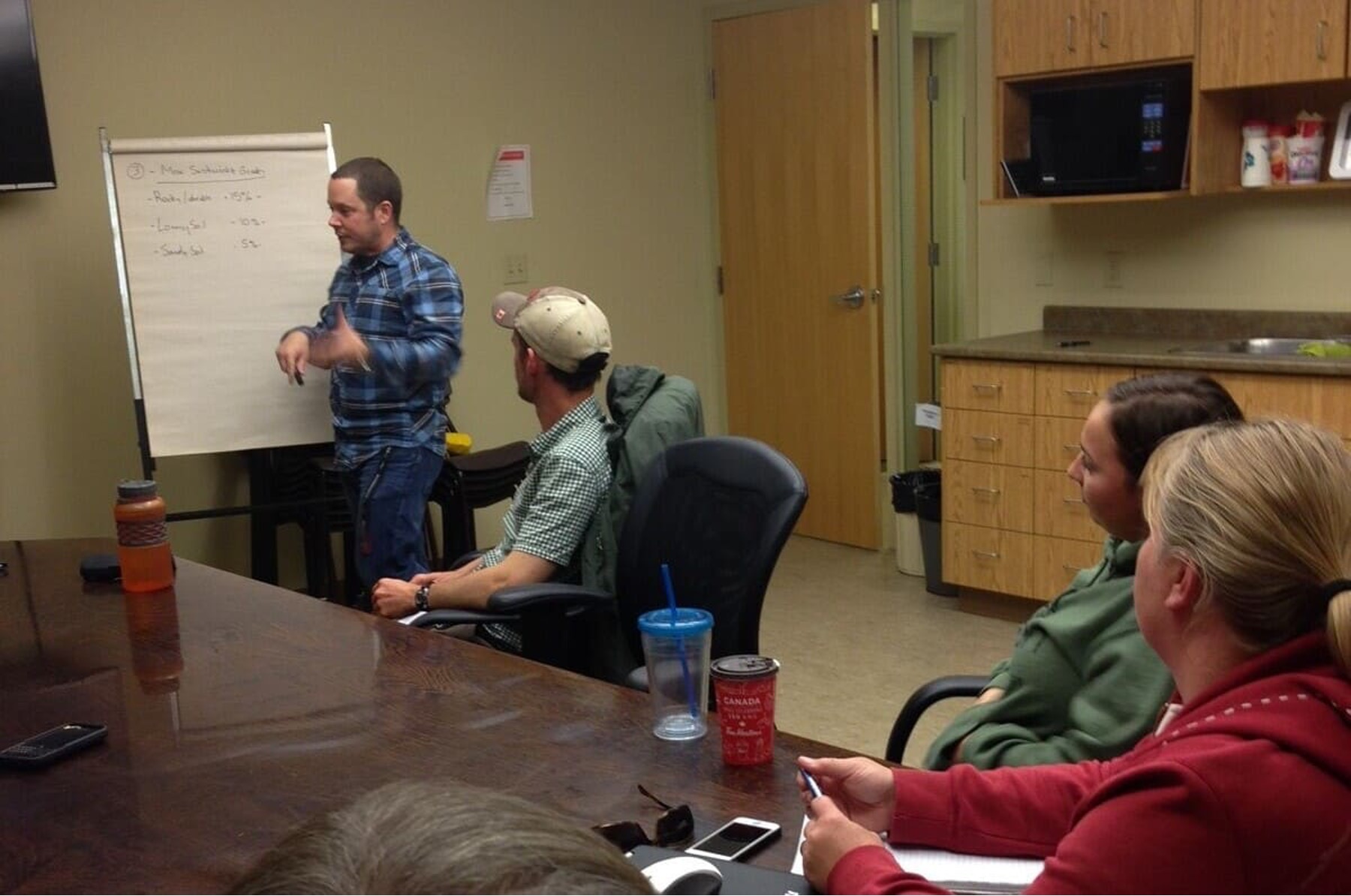
We spent the morning of the assessment clinic learning theory in a classroom environment, and then in the afternoon we got to put our knowledge to work, and asses a trail. We worked in groups of three (which I was very happy about because to be honest, I was a bit lost at first), assessing a trail using all the information we learned. My job during our project was to use the “inclinometer” to measure the slope of the trail. When they first handed me this fancy device I had no idea what it was, and how to use it. After a quick lesson and some practice, I was an inclinometer pro!
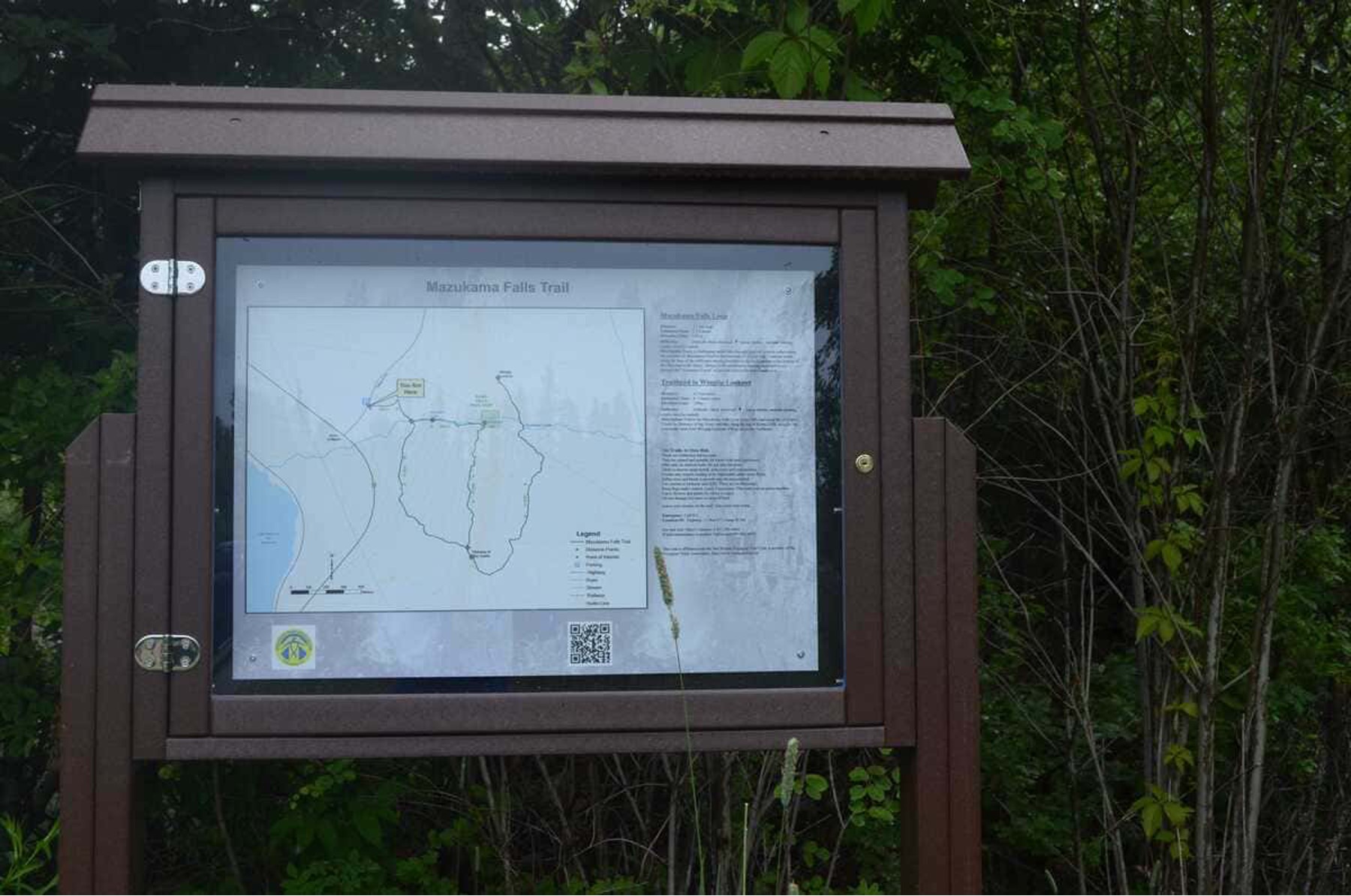
Once we reached the top of the trail, each group went over their assessment and reposted their findings. I really enjoyed taking this clinic, and I was amazed about how much there is to planning, building and assessing trails for safety and sustainability. A big thank you to Kirsten Spence of the Nor’wester Voyageur Trail Club for coordinating the clinic. The Nor’wester Club manages the Deer Lake Mountain Trail system and Mazukama Falls Trail, and is currently working on other trail systems to sign, insure and promote under its umbrella. Trail volunteers and club members Rob Swainson and Chris Leale took part in this clinic to hone their trail assessing skills. If you love trails and are interested in volunteering to do maintenance sweeps or join an active trails club, send me a message and I’ll connect you to the right people.
Until next time, exploring the edge – JZ
Posted by Jonna Z
Despite the cold, winter hiking is one of my new favorite pastimes. There’s something about walking through the bush on a beautiful day with the sun reflecting off the snow. Nipigon Bald Spot Trail is the perfect place to go if you’re looking for the full view of Nipigon, in a short amount of time. For someone who has grown up here, I have had the opportunity to hike to the bald spot about a million times (no joke). The Bald Spot is a Singletrack Society Trails Association Trail, maintained by local trail builder Michael Elliott. This trail is a 2.8-kilometre multi-use, non-motorized recreation trail. The trailhead is located at the end of Greenmantle Drive where the pavement meets the dirt road.
As I leave my front porch, accompanied by my dog Jake and my dad, and walk down Greenmantle towards the trailhead, a thought comes to mind – I wonder how many people have actually been up here? Sometimes I think we forget all of the beautiful places we have here in Nipigon. There are a few different routes get to the top of the Bald Spot. One involves a bit of climbing, and the other is more of a walk. We chose to take the walking trail to the top, which took us about 15 minutes. If you choose to turn around and walk back the same way you came, it is actually a fantastic, family-friendly hike is a little more challenging than a walk around the block. Plus, the kids have a great time exploring the forest while getting their exercise.

Blue sky as far as I could see, with a perfect view of our lovely little town. Sitting back and looking over the place that raised me, I got to thinking. I could see the entire town. The entire town right in front of me, all at once. Looking to the left I see McKirdy St, followed by the seven beeline streets leading to the center of the town. Looking straight I see the Nipigon arena, where I spent most of my childhood, the “hustle and bustle” of busy downtown Nipigon (it’s 5: 00 P.M on a Wednesday) and the newly constructed Nipigon bridge. To the right I see the scenic Nipigon Marina located at the end of Brennen Dr. Listening closely, I can hear the screams and roars of children playing in the snow, dogs barking, and families enjoying their Wednesday evening.

After we took a few pictures, we continued with our hike. Instead of heading back down the way we came we decided to take the long way down, which comes out at the end of Wadsworth, near the Service Ontario building. It was nice to see that someone had already been through this way with snowshoes, so it was freshly packed. We ran into two locals also hiking the trail while we were on our way down. After walking for another half hour, we got to the end of the trail.

This place is breathtaking. This view, this town, it’s truly something special. Sure, we might be just another small town at first glance, but there is so much heart and liveliness within our streets.

I highly recommend a trip to the bald spot to visitors, and for those who live here who still haven’t experienced it. Who knows, maybe you will descend from the cliffs with what I did – a greater appreciation for our little town.
Until next time, exploring the edge.
Jonna Z
Posted by Jonna Z
What does everyone around here get excited to do when the snow disappears? Gardening? No, too cold for that. Baseball? Brrrrrr. No, I’ll give you a hint. You have to stay up really late (for me anyway), use a flashlight, and wear rubber boots. You guessed it. Smelting! It’s a hugely popular family outing here in Northwestern Ontario, but it is something rarely experienced by people from the south. Smelts are small fish that “run” when Lake Superior’s tributaries warm to between 42 to 45 degrees, which usually happens around late April. However, depending on snow and temperature, it can vary from year to year. In mid-April, the talk around town and on local social media is usually around the same topic – are the smelts running yet?
Smelts are sensitive to temperature and light, which is why you catch them at night, usually between 11:30 am and 2 am. I try to go smelting at least once a year, particularly for the social aspect of the evening. This year I went with two friends and my brother. We used the good ol’ word of mouth to know exactly when and where the smelts were running thick. Ozone was our sweet spot this year and thankfully Bailey and Kylie were well prepared with a net and bucket. We were only there for about 20 minutes and had no problem filling the bucket.
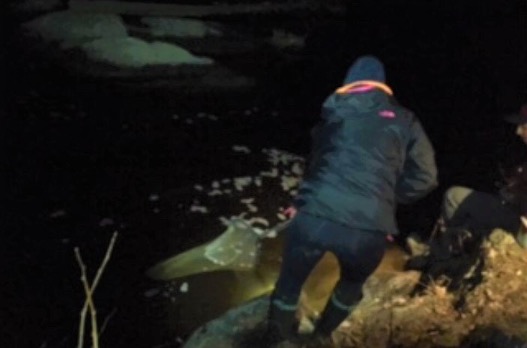
A common question non-smelters ask is “What do you do with them?”. The answer is, a lot! You clean and eat them. Many would agree the cleaning is the worst part, but I’ve been told the easiest way to do this is by using a pair of kitchen scissors, cutting off the heads and slitting them along the belly. Run your fingernail along the backbone from the inside and remove any blood and wash them off. Many people will fry them up fresh like this in butter, and some will coat them in flour then fry. If you’re not into eating smelts, you can also freeze them and use them as bait for fishing.
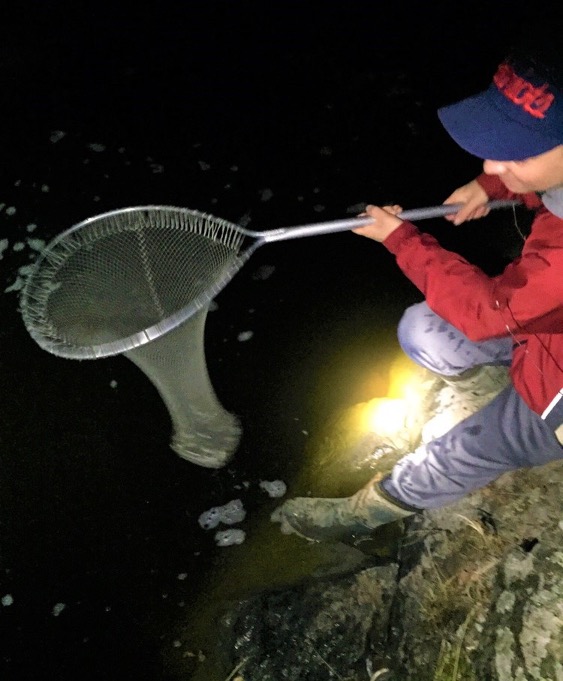
I have very vivid childhood memories of going smelting at Kama with my Uncle Chris and Dad, just long enough for one of us kids to fall trying to hand catch a smelt, resulting in a frozen, wet, crying child. This seemed to happen every year without a doubt, but it was all part of the tradition. It wasn’t a successful smelting trip unless a kid was crying by the end. It’s also a well-known tradition that when you catch your first smelt, you need to bite the head off. It tastes just like sushi!

I had an awesome night smelting, and can’t wait until next year. If you are new to the area and aren’t sure where or when to go, just ask around. Most smelters would be happy to show you the ropes.
Until next time, exploring the edge.
Posted by Jonna Z
This week’s adventure brought me to the Nipigon Marina for some kayaking. With the Celebration on The Great Trail coming up this Saturday, it was the perfect opportunity to explore our portion of the Trans Canada Water Trail.
In late summer of 2016, an EZ Dock was installed at the marina to make it easier for people to launch their kayaks and canoes. It’s perfect for paddlers of all experience levels, from the beginners who have never been in a boat, to the advanced paddlers! Everyone will find boarding, launching and recovery a breeze. The Township of Nipigon received funding for the launch, a composting washroom, and signage from Trans Canada Trail through the Lake Superior Watershed Conservancy. It’s all part of setting up access point infrastructure for the Trans Canada Water Trail.
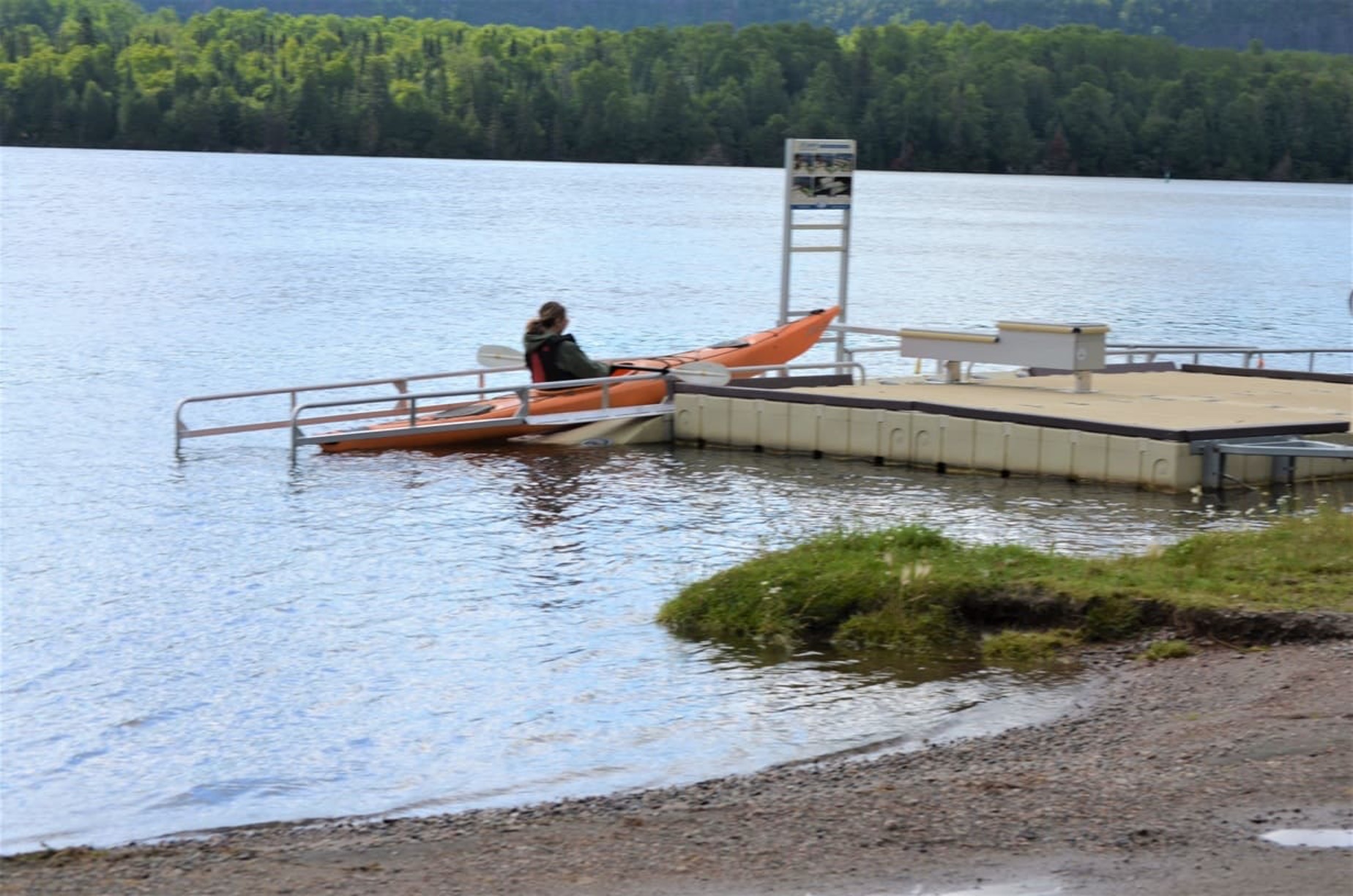
I have been kayaking quite a bit out at camp, but this was a first when it comes to kayaking at the Nipigon Marina, as well as using an accessible dock launch. We got down to the marina around 9:30, unloaded the kayak (well I watched as the boys unloaded the kayak), put on my lifejacket, then set off. It wasn’t a windy day so the water was calm, other than the current. My paddle started at the EZ Dock – at the end of the marina – and I made my way past all of the docks, and under black bridge into the lagoon. I personally found that when paddling in and around the lagoon I could feel the current the strongest.

As the most northerly port in North America, the Nipigon Marina is the perfect place to stop. With a deep-water channel, all the way to the fully serviced marina, boaters are invited to cross the 49th parallel and receive their certificate commemorating the occasion. The marina is also set up with camp sites, washrooms, water, pump outs and more. It’s the perfect place for someone who likes to boat or shore fish, hike, or bike. Or just enjoy the beautiful scenery. Look for pelicans, loons, ducks, bald eagles, and blue herons while you explore the marina.

I really enjoyed my kayaking experience, and would love to do it more regularly, but first I need to learn a bit more about kayaking equipment, skills, and tricks.
What to know?
- Paddle: the size of paddle you’ll need depends on your height, paddling style and the width of your boat so make sure you get some advice before you pick up one.
- Life Jacket: even if you can swim, you must wear a lifejacket! Look for a low-cut model that fits tightly while still giving you enough room to move your arms freely.
- Wet Suit/Swim Suit: I took my chances and just wore my regular clothes, but if you don’t want to chance getting all your clothes wet, a wet suit or swim suit is a good idea.
- Paddling: Place your hands on the paddle shaft a little further apart than shoulder width, The basic paddle technique is a forward stroke. Place the blade in the water near your toes. Pull the blade back alongside the kayak then lift the paddle and perform the same move on the other side.
- Rolling: It’s always a possibility that your kayak could tip, make sure you know how to get out of the kayak safely and efficiently. Safety first.

Until my next adventure, exploring the edge.
Posted by Jonna Z
Autumn. Fall. In my opinion, this is the prettiest time of the year. Watching the trees turn from green to all types of orange, yellow and red is a beautiful experience.
For most people in our area, autumn means the start of hunting season. I personally am not a hunter, but there are a lot people who can’t wait for hunting season. Hunting is a traditional activity that involves a lot of residents and visitors every year.
With animals ranging from bear, deer and moose to wild turkey, partridge and more, there is an outdoor experience for every hunter. Before you can hunt in Ontario you must be at least 16 years old (or 15 with written parental consent), take the Ontario Hunter Education Course, take the Canadian Firearms Safety Course if your planning to use a gun to hunt, get a hunting Outdoors Card and get all required tags and seals for the game you wish to hunt. You also must carry both the hunting Outdoors Card and license tag whenever you hunt. I was interested to discover that 100% of license fees go towards protecting fish and wildlife in Ontario. 25% is used for regulation, 19% for enforcement, 20% for science, 15% for conservation, 7% for education, and 14% for licencing. There are two types of hunting in Ontario, big game, and small game. Big game hunting is used to hunt black bear, caribou, deer, elk, and moose. Small game hunting allows for hunters to hunt game birds and game mammals.
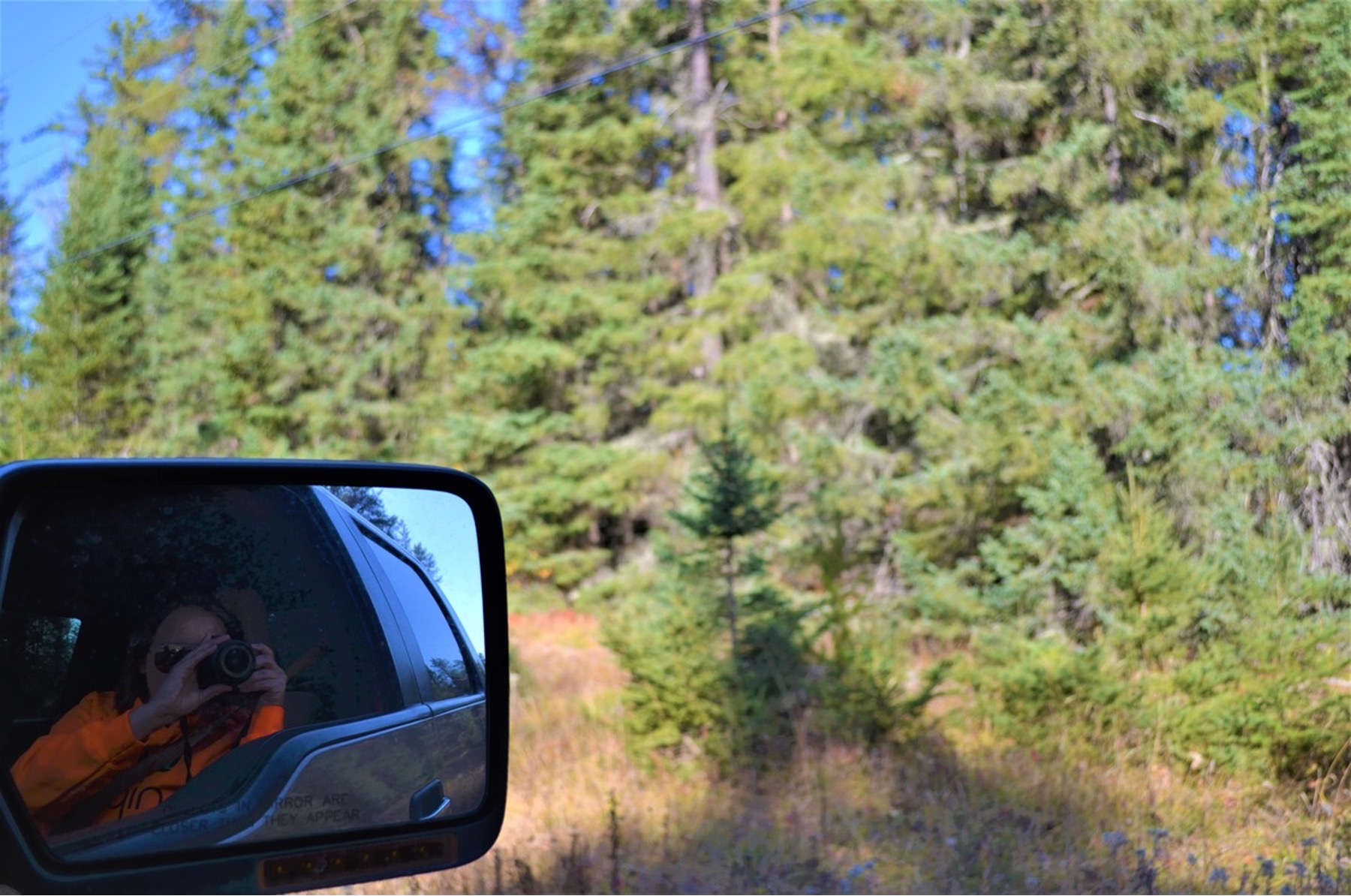
I was excited to get out there, even though I couldn’t actually harvest an animal, since I don’t have my hunter safety card or a license. I was still excited to just come along. From what I remember, I had been partridge hunting once in my life, and it was a traumatic experience. 10-year-old Jonna was not ready for that! However, living in a rural community I know a lot of kids who do enjoy hunting. They tell me there is nothing more exciting than taking that successful shot, and nothing more satisfying than taking fresh dinner home to your family!
Needless to say, I did not know anything about hunting when I went out, besides the fact that you have to wear orange clothes. Coincidentally, orange is my favourite colour. But as the day went on, I learned so much:
- Make sure you follow all laws and regulations applicable to your area
- Finding a place to hunt – make sure you are hunting within legal limits, and get allowed access if you are hunting on private property.
- Safety first – you can’t put a bullet back into a gun
- Dress for success (check out my hunter orange Nipigon hoodie – available at the Nipigon municipal office….) – make sure you have your “hunter” orange on
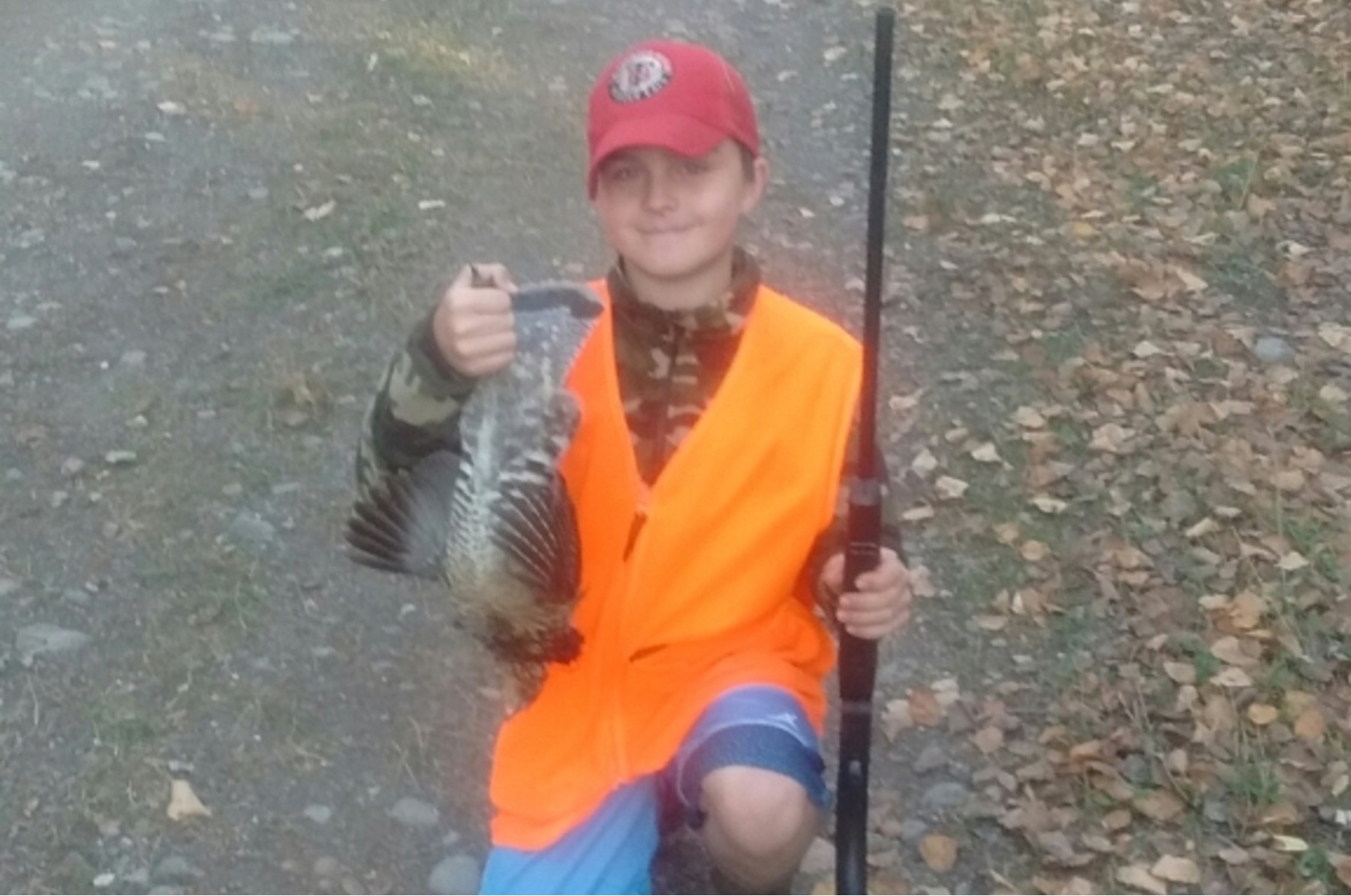
We spent a few hours in the bush, but no luck. Nevertheless, it was a great day outside. I have always loved being outside, although I have never really absorbed the smells and sounds of nature so intensely, it was the loudest silence I have ever heard. I’m not sure if I will ever become an actual hunter, but I enjoyed the learning experience.
Posted by Jonna Z
Winter, a northerner’s favourite season. Despite the 30 below weather, burning faces, dump loads of snow, poor road conditions, and all the other fun stuff that comes along with winter, we still seem to love it. Winter here in Northwestern Ontario is full of surprises, even though the ground might be completely dry today, it could have 4” of snow on it tomorrow. Our months of Summer and “week” of Autumn are beautiful as well, but it is winter that establishes the character of our region and our mindset. We have completely learned how to be one with this season and fully embrace it.
Now, I can fully admit to being one of those winter wusses, I complain about the cold as much as the rest of us, but there’s something about the winter here that wouldn’t be the same anywhere else. Its crazy to think I have spent 21 winters here in Nipigon and there are so many things I have rarely, or never have done. In the spirit of old man winter rearing his frozen head, I figured I would put together a list of things I want to do this winter to be a true northerner.
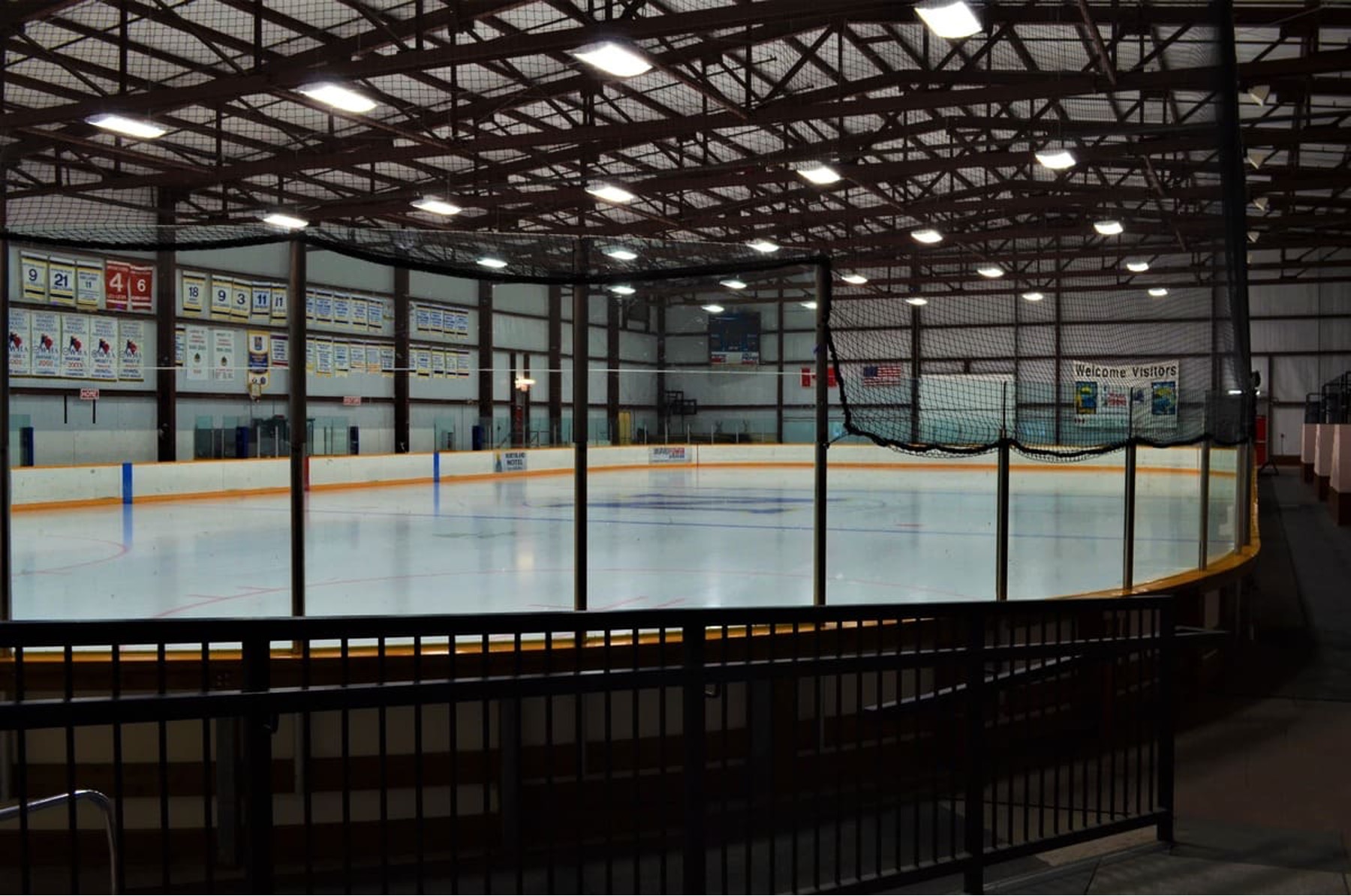
Jonna’s list of winter activities
Hockey:
I play, I watch, I coach. My all-time favourite thing about winter.
Curling:
This will be a new experience for me. I did curl when I was a kid but no longer have any idea how to play the game. My dad will have to help me out with this one.
Ice fishing:
Last time I went ice fishing I was playing tag with all the other kids (…this was years ago) and my foot went right into the hole. Let’s hope for a better experience this winter, ill leave the tag to the kids.
Snowshoeing:
Believe it or not, but I have never been snowshoeing. I promise you that will change – my camera and I are ready!
Ice climbing:
This one might have to be a ride along considering I am scared of heights, but we shall see. I think participating in the Nipigon Ice Fest in early March will be a great introduction for me.
Snowmobiling:
Snowmobiling (or sitting on the back), is one of my favourite things to do during the winter although I can fully admit to getting stuck every winter, and freezing my butt off.
Skiing:
One of the most popular winter activities in Canada. I went downhill skiing last winter for the first time, so this winter I should be a pro right?
Cross-country skiing, on the other hand, is something I have never done, and can’t wait to try. I have heard that Cross Country Skiing is one of the most intense workouts you can do in the winter. There are two sets of groomed trails in Nipigon, so I’m going to check them out.
Skating:
For a country where allegedly everybody plays hockey, it’s surprising how many people can’t find their skates. Strap on those blades and putt around the ice for a few hours.
Tobogganing:
Who wouldn’t want to launch themselves down a hill with no form of steering. Despite the occasional injury, it’s one of the most fun things to do in the winter. Tobogganing isn’t just for kids, it’s for all people who like screaming in public and wiping out with no control.
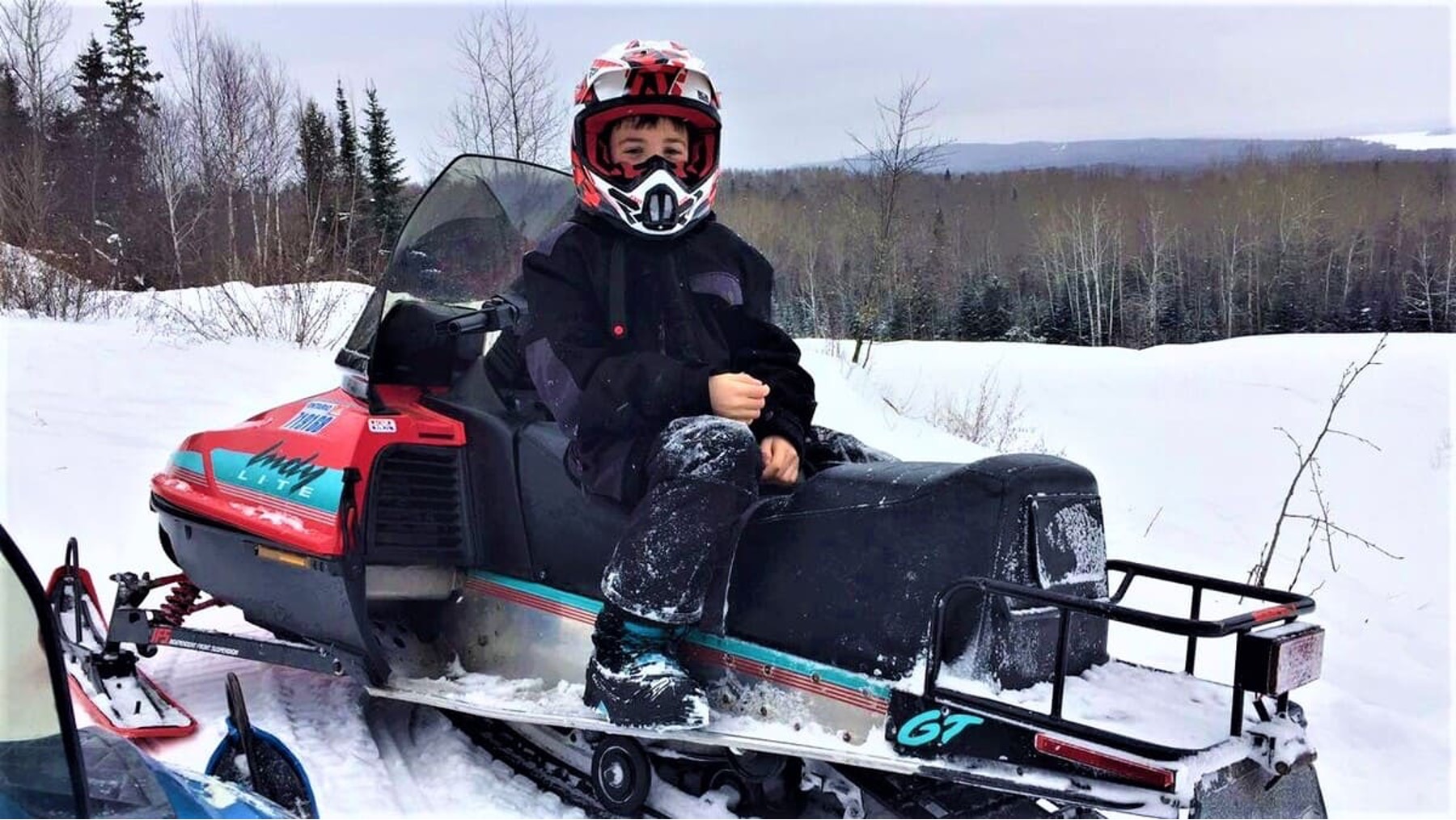
It’s going to be a crazy busy winter, and I am super excited. If you know of any other activities essential to the winter experience in Nipigon, let me know.
Here’s to a winter full of adventures.
Until next time, exploring the edge.
Posted by Jonna Z
Lake Superior. I can honestly say this is one my favorite places in the entire world. I have been venturing out on Gitchi Gumi since I was a little kid.
My big lake adventure started on Friday afternoon at the Nipigon marina. Let’s just say, it can be an interesting site. My dad and Uncle Chris had their boats docked and ready to go. Just as we were loading up, the water started to rise. This is something I’ve never witnessed. The water rose up approximately 6 inches in two minutes, then went back down 5 minutes later. Being an extremely curious person, I googled this to figure out what happened before my very eyes.

It was something called a siege. Sieges are typically caused when strong winds and rapids change and push water from one end of a body of water to the other. When the wind stops, the water rebounds to the other side of the enclosed area, sort of like a bathtub. This happened twice while we were getting ready to leave. Have no fear, the siege did not hold us back. We climbed aboard and were off to Owl Island.

There are so many amazing places to explore, the first one being the CRP slip. Located on the south side of St. Ignace island, this is a beautiful, secluded cove visited by many sailors/boaters. It is one of the safest docking sites on Lake Superior where many boats go to get out of bad weather. The land is owned by the Dougal family from Thunder Bay, but they have granted the public access. Those who frequent the cove help maintain the camp and sauna. There are 4 large docks for people to tie up their boats, a guest camp, sauna, fire pit, outhouses, and lots of tenting space. There is a vigorous hike up St. Ignace Island overlooking Superior. I highly recommend taking the trip out to CRP slip for a few nights, you won’t be disappointed.

Another hidden gem out on the “Big Lake” is Duncan Cove, located just south of St. Ignace island. Owned by the Crown, Duncan cove is commonly known as a “safe haven” for those wanting to avoid the harsh weather that Superior can whip up. There is one area of the cove that has a hole in the rock, perfect for pictures for those who can handle the cold Lake Superior water.
Cariboo Cove is another great place. Also Crown land, it’s a safe harbor for all boaters. Located in Nipigon Bay, it has a little hunting camp, and sauna for all to use. The frontage hosts a lovely beach, perfect for a swim on a warm summer day.

As you examine the cliffs on the eastern shore across from Red Rock, you will discover a series of Indigenous paintings, or pictographs. It is estimated that they are between 400 and 2000 years old. The origin and meaning of the symbols remains a mystery. Nonetheless, they are very interesting and I suggest going to take a look.
I had an amazing weekend at camp, and exploring Lake Superior, thanks for coming along.
Until next time, exploring the edge – JZ
Posted by Jonna Z